
Browse diagnosis-specific orthopaedic and physiotherapy-informed exercise programmes for the knee, hip, back, scoliosis, flat feet, shoulder, elbow, hand and balance. The images illustrate the topic and do not demonstrate every individual exercise.
ARAVITA MEDIZIN
Ihr Körper. Ihr Weg zur passenden Leistung.
Wählen Sie den gewünschten Bereich direkt am Körper.
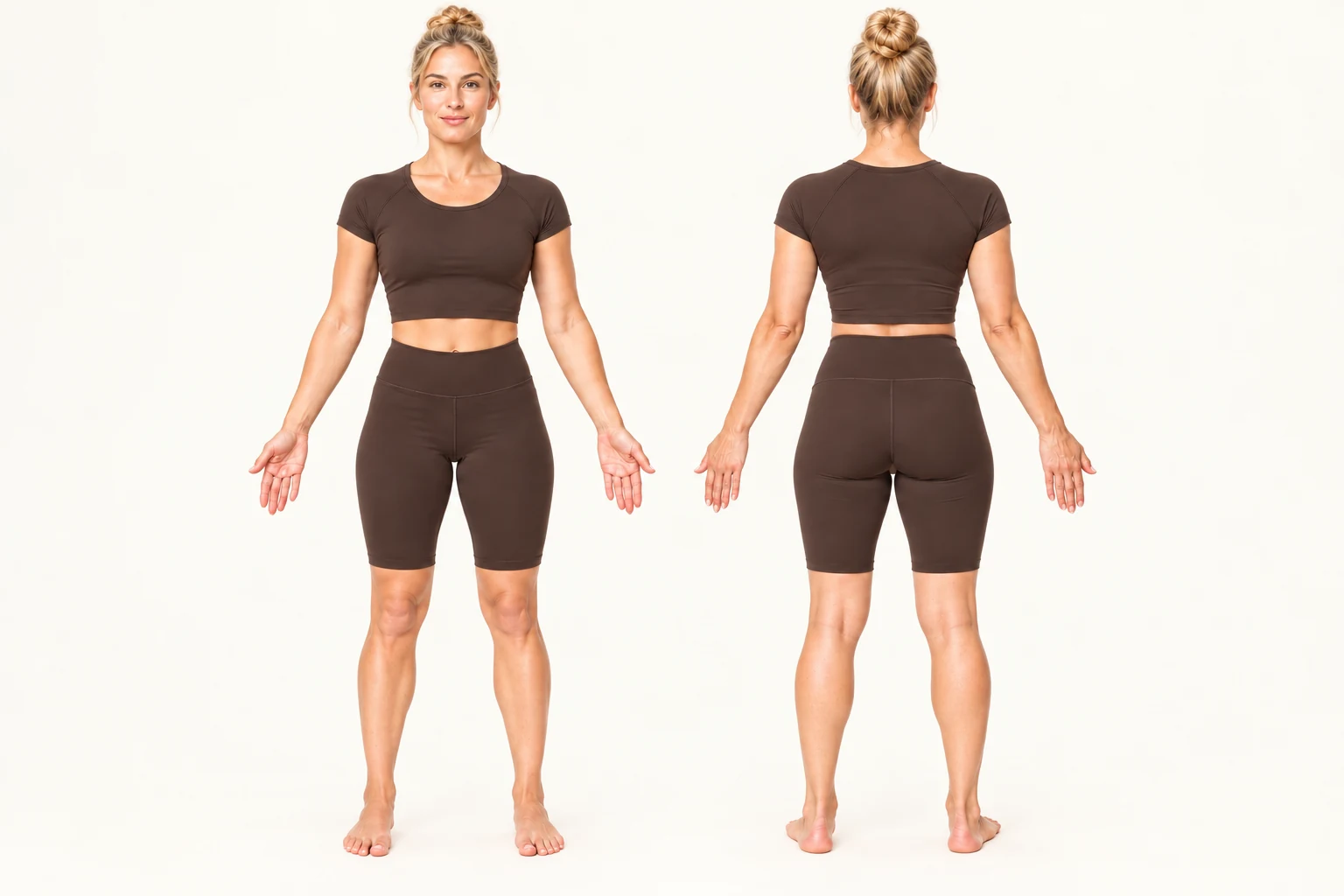
ARAVITA MEDIZIN · Bremerhaven
Exercises by diagnosis
Explore orthopaedic and physiotherapy exercise programmes organised by condition. Please check that the exercises are suitable for you with your treating clinician.
26 programmes by diagnosisChoose a body area or search for a diagnosis to see matching programmes.
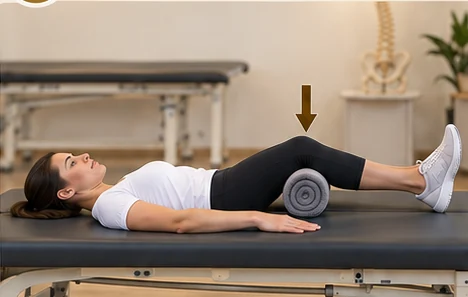
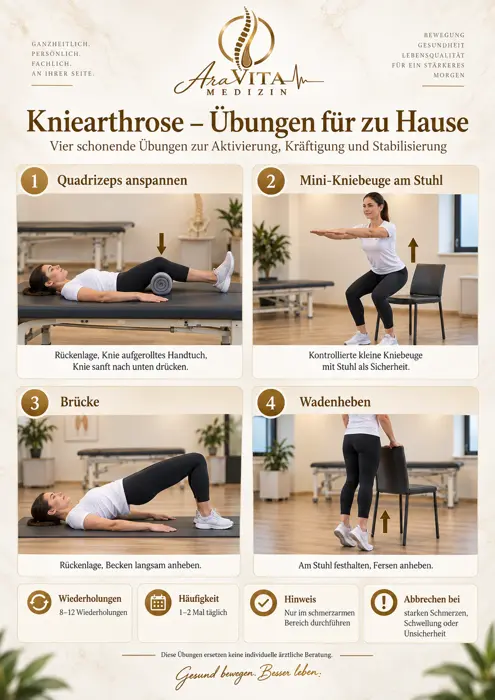
Knee osteoarthritis
Maintain comfortable movement and muscle strength, adjusting exercise to pain and swelling.
Open programme →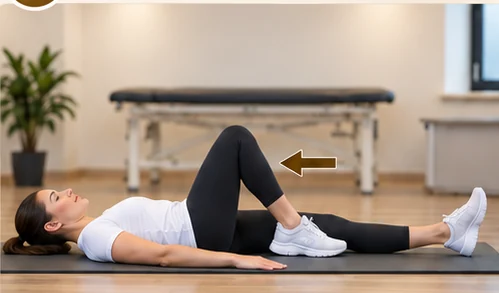
Patellofemoral pain
Build hip and knee strength together and increase loading gradually.
Open programme →Patellar tendinopathy
Build tendon capacity progressively and adapt jumping or running volume.
Open programme →Meniscal symptoms – conservative management
Preserve comfortable movement and strength after assessment, provided the knee is not locked.
Open programme →ACL injury – exercises after clearance
Follow the individual injury and surgical protocol for permitted loading and range of motion.
Open programme →After knee replacement – according to your care plan
Use only as a supplement to the specific postoperative rehabilitation protocol.
Open programme →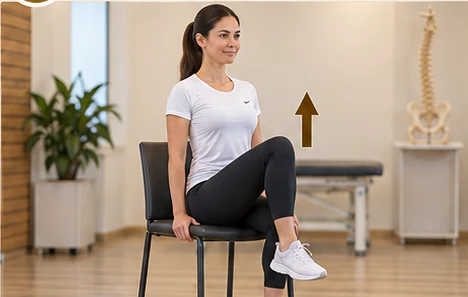
Hip osteoarthritis
Strengthen hip and gluteal muscles gently, adapting walking distance to symptoms.
Open programme →Greater trochanteric pain syndrome
Load the gluteal muscles gradually and initially avoid sustained pressure on the painful side.
Open programme →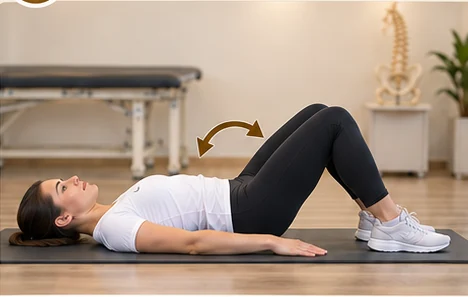
Non-specific low back pain
Combine regular activity, varied movement and gradual core strengthening.
Open programme →Sciatica / radiating leg pain
Choose the movement direction after assessment; do not do every suggested exercise indiscriminately.
Open programme →Lumbar spinal stenosis
Practise walking in tolerable intervals with breaks and comfortable positions.
Open programme →Scoliosis in children and adolescents
There is no universal one-sided correction: Schroth/PSSE must be tailored to curve pattern, Cobb angle and growth.
Open programme →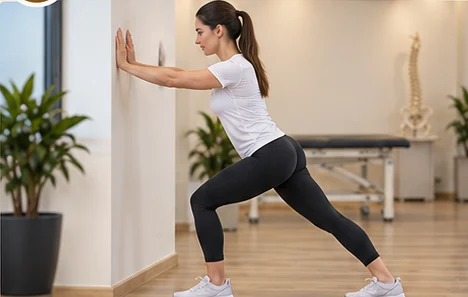
Symptomatic flexible flat feet in children
Painless flexible flat feet usually need no treatment; consider targeted exercise when symptomatic.
Open programme →Flat feet in adults
For suitable flexible conditions, work on foot strength, calf function and balance.
Open programme →Plantar fasciitis / heel pain
Move the plantar fascia and calf gently, then build activity gradually.
Open programme →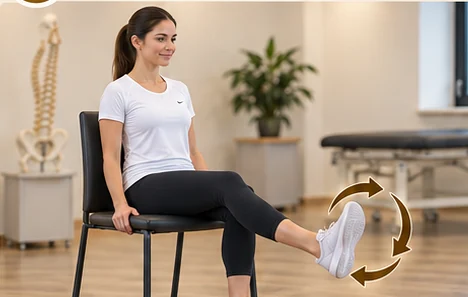
Achilles tendon symptoms
Build calf strength; avoid deep heel lowering for insertional Achilles pain.
Open programme →Ankle rehabilitation after a sprain
Begin only after fracture has been excluded and weight-bearing is permitted.
Open programme →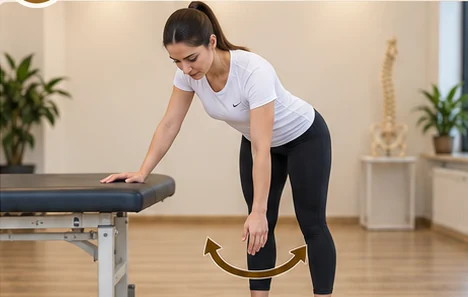
Shoulder / rotator cuff symptoms
Use controlled movement and shoulder-blade positioning; avoid sharp pain.
Open programme →Frozen shoulder – gentle mobility
Move within tolerance; do not force a stretch.
Open programme →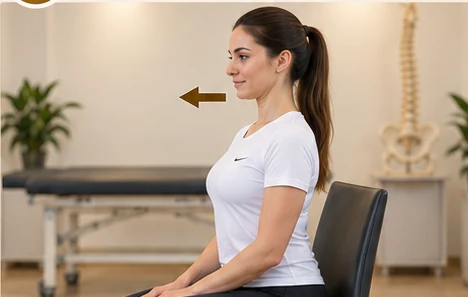
Neck pain / cervical spine
Use gentle movement and posture awareness without provoking dizziness or nerve symptoms.
Open programme →Tennis elbow (lateral epicondylopathy)
Load the wrist extensors progressively and adapt gripping and work demands.
Open programme →Golfer’s elbow (medial epicondylopathy)
Build flexor and pronator capacity progressively.
Open programme →Wrist strengthening
Following injury or a cast, progress only when movement and loading are cleared.
Open programme →Heberden’s nodes / finger joint osteoarthritis
Maintain hand function while protecting hot, inflamed or very painful joints.
Open programme →Thumb-base osteoarthritis
Stabilise the thumb gently; avoid powerful key-pinch grips.
Open programme →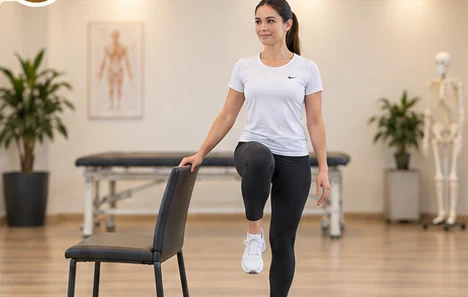
Locomotion Training / fall prevention
Inspired by Japan’s Locomotion Training; practise next to a sturdy support.
Open programme →No matching programmes found.
Knee osteoarthritis
View / download PDF ↓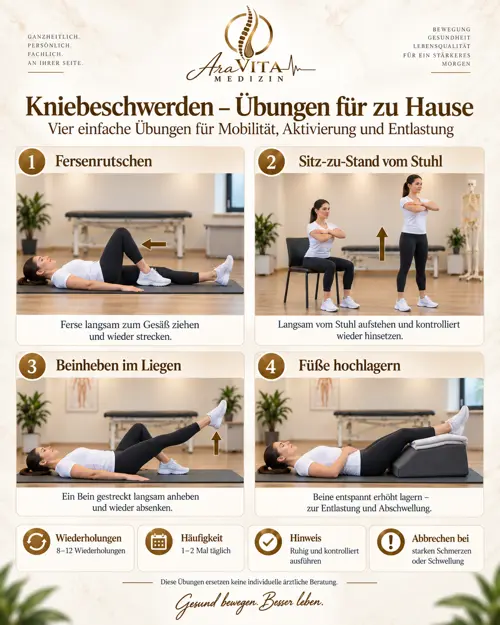
Knee pain & everyday activity
View / download PDF ↓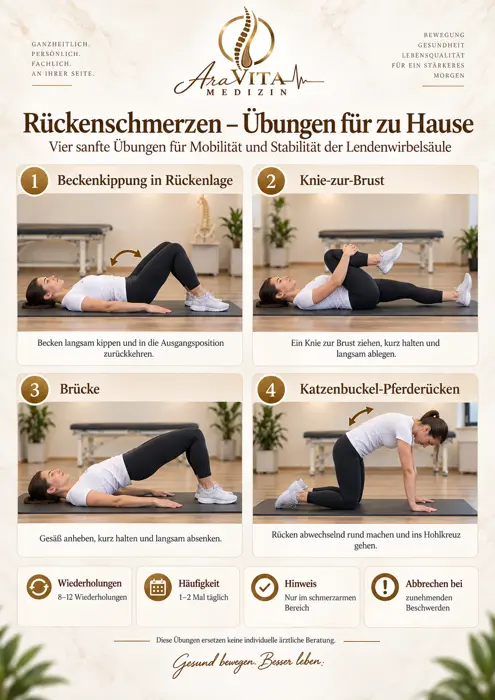
Back & lumbar spine
View / download PDF ↓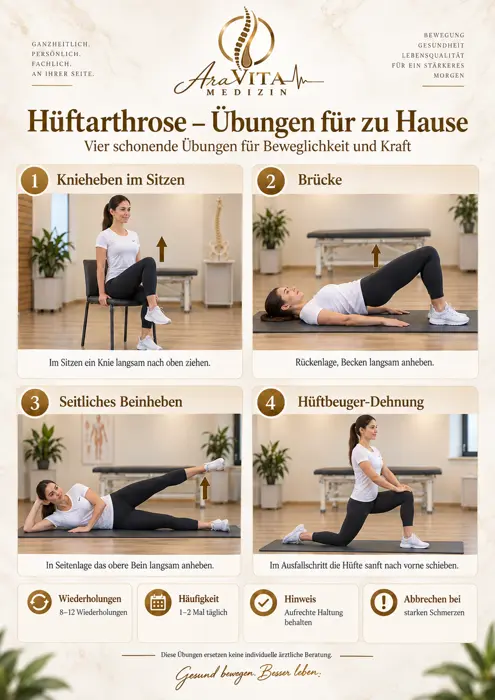
Hip mobility
View / download PDF ↓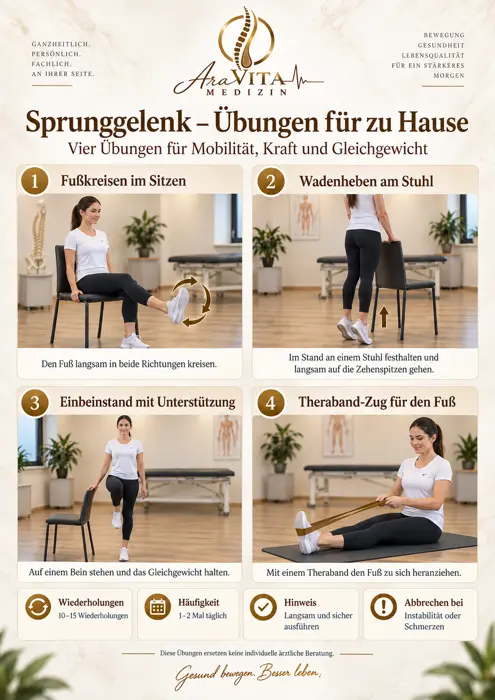
Ankle rehabilitation
View / download PDF ↓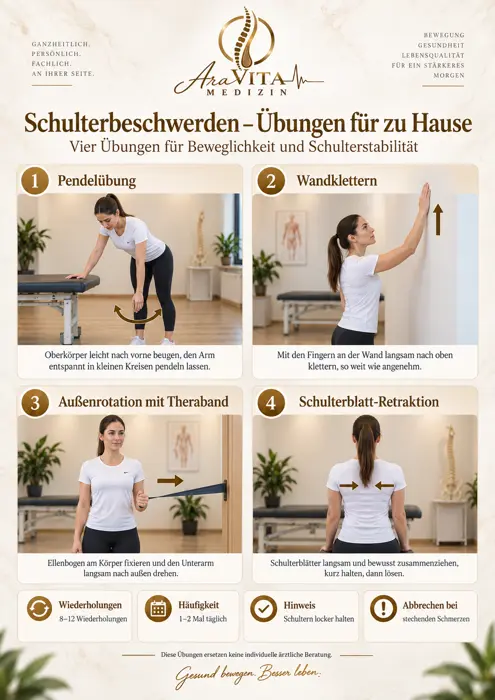
Shoulder mobility
View / download PDF ↓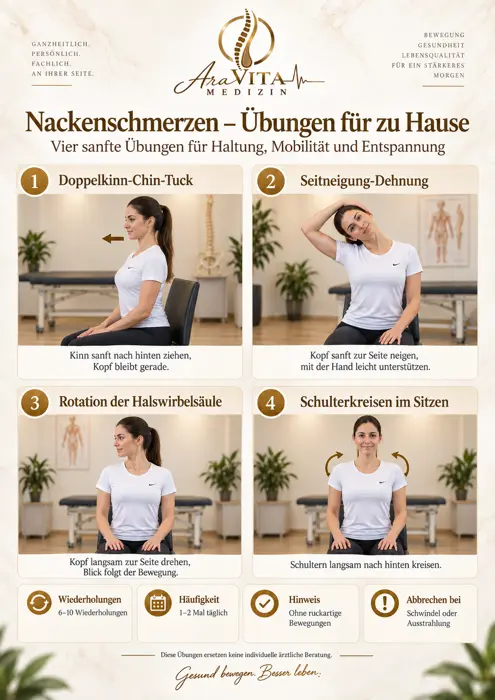
Neck mobility
View / download PDF ↓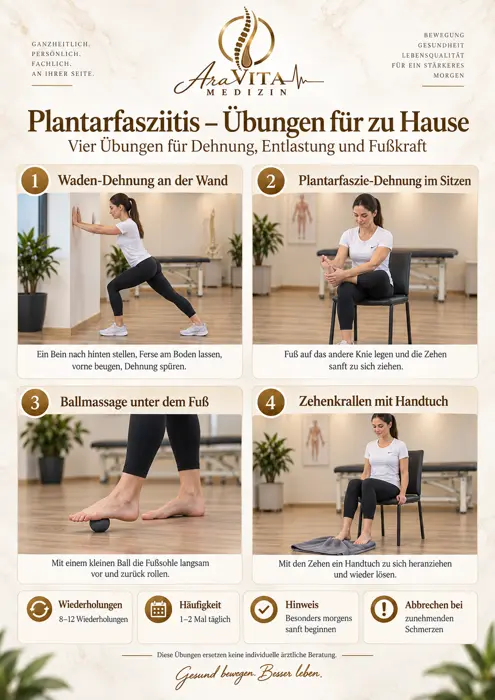
Plantar heel pain
View / download PDF ↓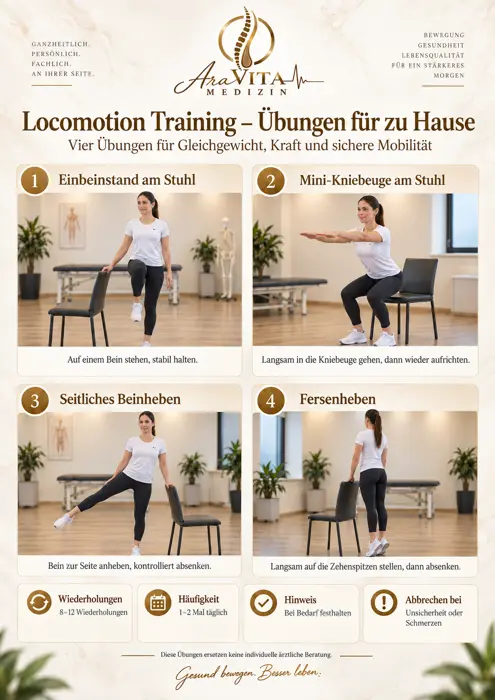
Balance & locomotion training
View / download PDF ↓This website cannot replace an individual medical examination or advice. In an emergency, call 112.
Read original German text ↗
Patientenservice
Bewegung für Ihren Alltag.
Übungsblätter und Alltagstipps zum Nachlesen, Ausdrucken und Mitnehmen. Wählen Sie die Körperregion oder suchen Sie nach Ihrer Beschwerde.
Bitte stimmen Sie die Auswahl mit uns ab. Nach Verletzungen oder Operationen gelten Ihre individuellen Belastungsgrenzen. Bei neuen oder stärkeren Beschwerden pausieren und ärztlich Rücksprache halten.
ARAVITA MEDIZIN
Ihr Körper. Ihr Weg zur passenden Leistung.
Wählen Sie den gewünschten Bereich direkt am Körper.
ARAVITA MEDIZIN · Bremerhaven
Exercises by diagnosis
Explore orthopaedic and physiotherapy exercise programmes organised by condition. Please check that the exercises are suitable for you with your treating clinician.
26 programmes by diagnosisChoose a body area or search for a diagnosis to see matching programmes.
Knee osteoarthritis
Maintain comfortable movement and muscle strength, adjusting exercise to pain and swelling.
Open programme →Patellofemoral pain
Build hip and knee strength together and increase loading gradually.
Open programme →Patellar tendinopathy
Build tendon capacity progressively and adapt jumping or running volume.
Open programme →Meniscal symptoms – conservative management
Preserve comfortable movement and strength after assessment, provided the knee is not locked.
Open programme →ACL injury – exercises after clearance
Follow the individual injury and surgical protocol for permitted loading and range of motion.
Open programme →After knee replacement – according to your care plan
Use only as a supplement to the specific postoperative rehabilitation protocol.
Open programme →Hip osteoarthritis
Strengthen hip and gluteal muscles gently, adapting walking distance to symptoms.
Open programme →Greater trochanteric pain syndrome
Load the gluteal muscles gradually and initially avoid sustained pressure on the painful side.
Open programme →Non-specific low back pain
Combine regular activity, varied movement and gradual core strengthening.
Open programme →Sciatica / radiating leg pain
Choose the movement direction after assessment; do not do every suggested exercise indiscriminately.
Open programme →Lumbar spinal stenosis
Practise walking in tolerable intervals with breaks and comfortable positions.
Open programme →Scoliosis in children and adolescents
There is no universal one-sided correction: Schroth/PSSE must be tailored to curve pattern, Cobb angle and growth.
Open programme →Symptomatic flexible flat feet in children
Painless flexible flat feet usually need no treatment; consider targeted exercise when symptomatic.
Open programme →Flat feet in adults
For suitable flexible conditions, work on foot strength, calf function and balance.
Open programme →Plantar fasciitis / heel pain
Move the plantar fascia and calf gently, then build activity gradually.
Open programme →Achilles tendon symptoms
Build calf strength; avoid deep heel lowering for insertional Achilles pain.
Open programme →Ankle rehabilitation after a sprain
Begin only after fracture has been excluded and weight-bearing is permitted.
Open programme →Shoulder / rotator cuff symptoms
Use controlled movement and shoulder-blade positioning; avoid sharp pain.
Open programme →Frozen shoulder – gentle mobility
Move within tolerance; do not force a stretch.
Open programme →Neck pain / cervical spine
Use gentle movement and posture awareness without provoking dizziness or nerve symptoms.
Open programme →Tennis elbow (lateral epicondylopathy)
Load the wrist extensors progressively and adapt gripping and work demands.
Open programme →Golfer’s elbow (medial epicondylopathy)
Build flexor and pronator capacity progressively.
Open programme →Wrist strengthening
Following injury or a cast, progress only when movement and loading are cleared.
Open programme →Heberden’s nodes / finger joint osteoarthritis
Maintain hand function while protecting hot, inflamed or very painful joints.
Open programme →Thumb-base osteoarthritis
Stabilise the thumb gently; avoid powerful key-pinch grips.
Open programme →Locomotion Training / fall prevention
Inspired by Japan’s Locomotion Training; practise next to a sturdy support.
Open programme →No matching programmes found.
9 Übungsblätter verfügbar
Kniearthrose
Beweglichkeit erhalten · Muskulatur aktivieren
PDF · Deutsch · 1 SeiteKniefreundlicher Alltag
Bei Gonarthrose · Belastung passend verteilen
PDF · Deutsch · 1 SeiteRücken & Lendenwirbelsäule
Sanfter Einstieg bei unspezifischen Rückenschmerzen
PDF · Deutsch · 1 SeiteHüfte sanft bewegen
Bei stabilen Hüftbeschwerden · z. B. Coxarthrose
PDF · Deutsch · 1 SeiteSprunggelenk stabilisieren
Nach abgeheilter Verletzung · mit Belastungsfreigabe
PDF · Deutsch · 1 SeiteSchulter sanft mobilisieren
Bei abgeklärten Schulterbeschwerden
PDF · Deutsch · 1 SeiteNacken beweglich halten
Bei muskulärer Verspannung · ohne akute Nervenreizung
PDF · Deutsch · 1 SeiteFerse & Fußsohle
Bei Plantarfasziitis · vorsichtiger Einstieg
PDF · Deutsch · 1 SeiteBeweglich bleiben – Locomotion Training
Japanisches Bewegungskonzept · Kraft & Gleichgewicht
PDF · Deutsch · 1 Seite · Stand 09/2026Kein passendes Blatt gefunden. Versuchen Sie eine andere Körperregion oder setzen Sie die Auswahl zurück.
Quellen und Hinweise zu den Übungsblättern
Die Blätter sind eigenständig in deutscher Sprache zusammengestellt und illustriert. Fachliche Orientierung bieten die Patienteninformationen der American Academy of Orthopaedic Surgeons (USA), des Hospital for Special Surgery, der Japanese Orthopaedic Association sowie NICE und NHS. Die jeweilige Quelle ist im PDF verlinkt. Die Blätter ersetzen keine persönliche Untersuchung oder individuelle Übungsanleitung.
AAOS: Übungsprogramme · NHS: Beweglichkeitsübungen · JOA: Locomotion Training · NICE: Arthrose